
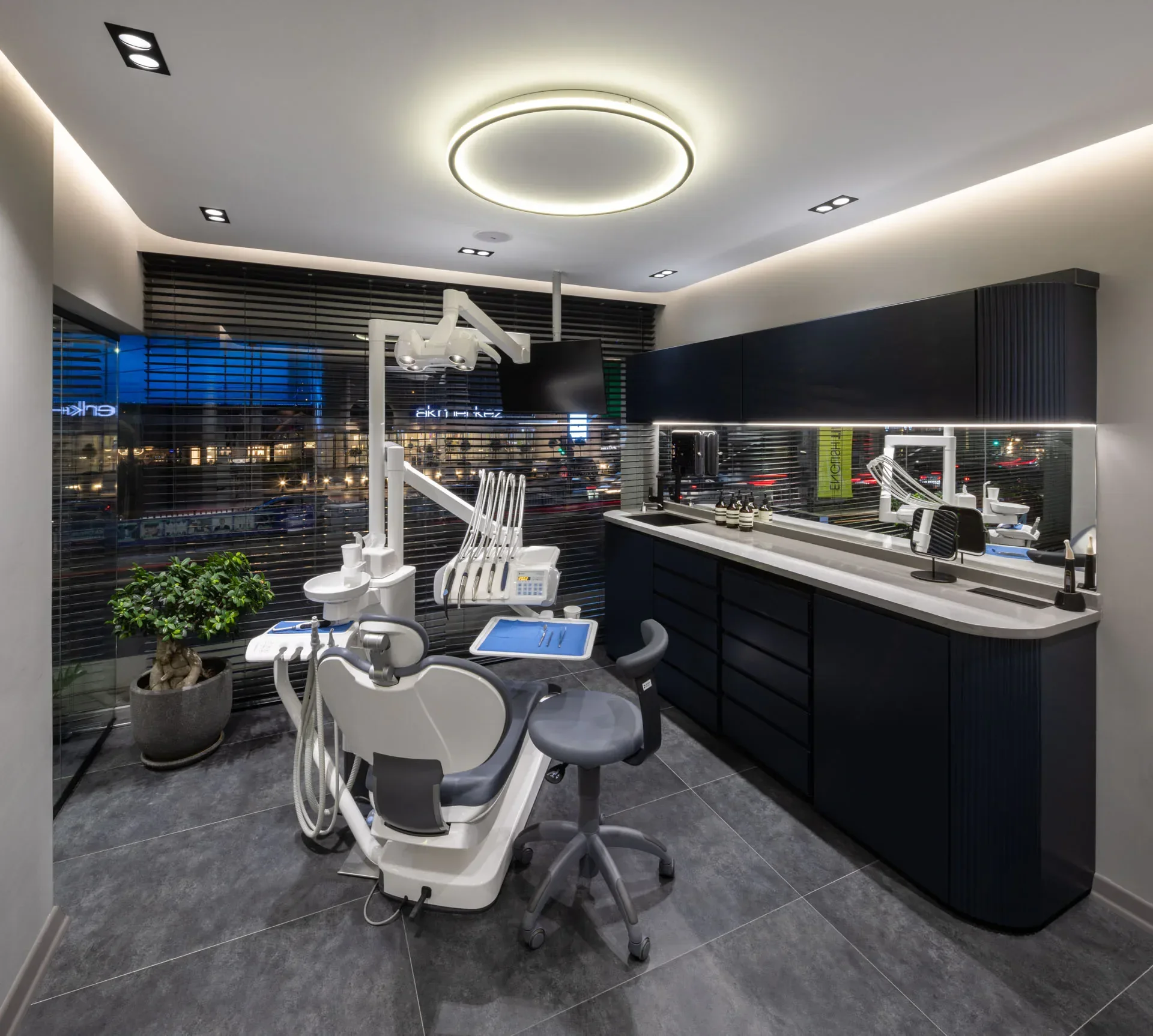
Veneers or Crowns? How the Right Restoration Is Chosen
A veneer and a crown are different restorations, and zirconia is a material rather than a treatment. This guide untangles the terms and explains the clinical factors behind the choice.

Doğa Erginoğlu Dental Practice
Last updated:
"Veneer" and "crown" are often used as if they meant the same thing, and material names such as zirconia add another layer of confusion. In fact a veneer and a crown are different restorations, while zirconia and lithium disilicate glass-ceramic are materials, each usable in more than one type of restoration. This guide separates the terms, then walks through the clinical factors behind each choice.
Terminology first
Restoration type: veneer vs crown
A veneer is a thin layer of ceramic or composite bonded to the front surface of a tooth. The back and biting surfaces are largely left alone. Veneers are mostly used on front teeth to change colour, shape or minor irregularities.
A crown covers the visible part of the tooth on all sides. To make room for it, tooth structure is removed from every surface. Crowns are also used to protect weakened or heavily restored teeth and to restore dental implants.
The difference matters because the amount of tooth removed for a crown is usually much greater than for a veneer. If you have seen the two words used interchangeably online, it is worth asking exactly which restoration is proposed.
Material: lithium disilicate vs zirconia
The two ceramics discussed most often are:
- Lithium disilicate glass-ceramic: a glass-ceramic that transmits light much like natural enamel and is bonded to the tooth. It is used for both veneers and crowns.
- Zirconia: zirconium dioxide, known for its high strength. It is used mainly for crowns and bridges.
Feldspathic porcelain is a third option, used mainly for veneers. So the useful question has two parts: first, does this tooth need a veneer or a crown? Then, which material suits it?
When veneers make sense
Veneers are considered when the tooth is largely sound and the change needed is mainly about appearance, for example:
- Discolouration that does not respond well enough to whitening
- Small chips, wear or uneven shapes on front teeth
- Small gaps and mild irregularities
- Bringing several teeth into harmony as part of a digital smile design
The ADA's MouthHealthy page notes that veneers may not suit people who clench or grind their teeth or who have a deep overbite, and that decay and gum disease must be treated first. More detail is on the porcelain veneers page.
When a crown is needed
Cleveland Clinic lists weak, cracked or worn teeth, teeth that have had root canal treatment, implant restorations and severe discolouration among the reasons for a crown. In general, the less sound tooth remains, the more a restoration that wraps around and protects it matters. The crowns and bridges page explains how crowns are made and fitted.
Not every loss of tooth structure calls for a crown. On back teeth, where damage is too large for a filling but not extensive enough for a crown, inlays and onlays replace only the missing part. For a tooth that has had root canal treatment, the choice depends on how much sound tooth is left.
Lithium disilicate vs zirconia
Neither material is better across the board; each suits different situations.
Translucency and a natural look
Lithium disilicate glass-ceramic transmits light much like enamel, which makes it well suited to front teeth where appearance matters most. Cleveland Clinic also notes that all-ceramic crowns closely mimic natural enamel. Zirconia generally lets less light through. That needs careful thought on front teeth, but it can help when a dark tooth underneath has to be covered.
Strength
Cleveland Clinic describes zirconia as very strong and gentle on opposing teeth. For those reasons it is often considered for back teeth, where chewing forces are higher, and for bridges. Lithium disilicate is widely used for single crowns and veneers. The choice depends on the tooth's position and your bite.
Bonding
A veneer stays in place only through strong adhesive bonding, so bondable glass-ceramics and feldspathic porcelain are used. Because lithium disilicate bonds well to tooth structure, it suits more conservative restorations. Zirconia has a different surface and is usually used as a full crown that holds by wrapping around the tooth.
Covering dark teeth
On a tooth that has darkened after root canal treatment, or one with severe discolouration, a thin translucent veneer may not hide the colour underneath. A thicker restoration, a more opaque material or a crown may be needed. The colour underneath is therefore a key factor in choosing a material.
How much tooth is removed?
For a veneer, a thin layer of enamel is usually removed from the front surface so that the veneer does not look bulky. The ADA points out that this makes porcelain veneers irreversible, because removed enamel does not grow back. A crown involves removing tooth structure from all sides, so the reduction is usually greater.
The aim of a minimally invasive approach is to remove no more than the result requires. A digital design and a mock-up can help limit reduction to the areas that really need it, and in some cases options such as composite bonding, which need little or no reduction, are worth considering. The digital dentistry page explains how scanning and design support this.
Longevity: what studies show
A systematic review and meta-analysis of laminate veneers by Morimoto and colleagues (2016) estimated overall survival of about 89% over a median of 9 years: about 94% for glass-ceramic veneers and about 87% for feldspathic porcelain. The most common problem was fracture or chipping (about 4%), followed by debonding (about 2%).
For single crowns, a 2015 systematic review by Sailer and colleagues estimated 5-year survival of about 94.7% for metal-ceramic crowns, about 96.6% for leucite or lithium disilicate glass-ceramic crowns and about 92.1% for zirconia-based crowns. Most zirconia crowns in that review were layered with porcelain, and that group had more technical problems such as chipping. Because these data largely predate studies of today's monolithic zirconia crowns, they should not be read as evidence that zirconia is weak.
Cleveland Clinic gives an average lifespan of about 5 to 15 years for crowns. These are averages; hygiene, check-ups and habits such as grinding all play a part.
How the decision is made
No single factor decides it. Several are weighed together:
- Remaining tooth structure: a largely intact tooth points towards a veneer; significant loss points towards a crown.
- Position of the tooth: appearance dominates at the front, chewing forces at the back.
- Colour underneath: dark teeth may need more masking.
- Bite and grinding: high forces call for stronger materials or protective measures.
- Root canal history: treated teeth often need a separate assessment.
- Your goals: a change of colour or shape, or protection for a weakened tooth.
Which of these matters most in your case only becomes clear after an examination and any necessary imaging. If you are travelling from abroad, note that veneers and crowns usually involve a preparation visit and a fitting visit with laboratory work in between, although some ceramic crowns can be milled the same day when the case allows. Leave room for adjustments. Photos sent in advance can start the conversation, but they cannot replace the examination.
Care, grinding and night guards
Veneers and crowns are cared for much like natural teeth: regular brushing, cleaning between the teeth and routine check-ups. Plaque at the edges of a restoration can lead to decay and gum inflammation.
Clenching and grinding increase the load on restorations, which is why the ADA notes that veneers may not suit people with these habits. If grinding is identified, a night guard is often recommended. Restorations also cannot change colour later: the ADA's whitening page explains that crowns, veneers and tooth-coloured fillings do not lighten with bleaching. If you are thinking about whitening, it should come first, with the restoration shade chosen to match.
Frequently asked questions
Are teeth reduced for veneers, and is it reversible?
Porcelain veneers usually require removing a thin layer of enamel from the front of the tooth. Because enamel does not grow back, the treatment is considered irreversible. How much reduction is needed depends on the tooth and the planned change, and is decided after examination and design.
Which looks more natural, lithium disilicate or zirconia?
Lithium disilicate glass-ceramic transmits light much like enamel, so it is often chosen where appearance matters most, especially on front teeth. Zirconia lets less light through, which can be useful when a dark tooth needs to be covered. The right material depends on the colour and position of the tooth and on your bite.
Can people who grind their teeth get veneers?
The ADA's patient information lists clenching and grinding among the situations where veneers may not be suitable. That does not rule them out in every case: the severity of the habit, your bite and whether you will wear a night guard are assessed together. The decision is made after an examination.
How long do veneers and crowns last?
Cleveland Clinic gives an average lifespan of about 5 to 15 years for crowns. A meta-analysis of glass-ceramic and feldspathic veneers estimated overall survival of about 89% over a median of 9 years. Oral hygiene, regular check-ups and habits such as grinding all influence how long a restoration lasts.
Veneer or crown on a root-canal-treated tooth?
Cleveland Clinic lists root-canal-treated teeth among the reasons for a crown. Even so, the decision depends on how much sound tooth remains, where the tooth is and how much it has darkened. In some cases a partial-coverage restoration such as an onlay may also be considered.
Can I whiten my teeth after veneers?
Natural teeth can be whitened, but veneers, crowns and tooth-coloured fillings do not change colour with bleaching. That is why whitening is usually done before restorations, with their shade matched to the whitened teeth. Whitening afterwards can leave a visible colour difference between natural teeth and restorations.
Sources
- 1.Veneers (patient information). American Dental Association (MouthHealthy) (opens in a new tab)
- 2.Survival of feldspathic porcelain and glass-ceramic laminate veneers (systematic review and meta-analysis). International Journal of Prosthodontics (2016) (opens in a new tab)
- 3.Dental crowns (patient information). Cleveland Clinic (opens in a new tab)
- 4.All-ceramic vs metal-ceramic single crowns (systematic review). Dental Materials (2015) (opens in a new tab)
- 5.Teeth whitening (patient information). American Dental Association (MouthHealthy) (opens in a new tab)
Related treatments
- incisors, canines, premolarsPorcelain VeneersThin ceramic shells bonded to the visible surface of front teeth, considered for colour, shape and small gaps.
- incisors, canines, premolars, molarsCrowns and BridgesCrowns that cover the whole tooth and bridges that replace a missing tooth using the neighbouring teeth, made from materials such as zirconia or glass-ceramic.
- incisors, caninesSmile DesignA planning process that looks at tooth colour, shape and proportions together with the face and lips, using photographs, an intraoral scan and a trial smile.
- premolars, molarsInlays and OnlaysCeramic or composite pieces designed from a digital scan and bonded to teeth with damage too large for a filling but not yet needing a crown.
- incisors, canines, premolars, molarsRoot Canal TreatmentTreating an inflamed or infected tooth nerve (pulp) by cleaning and sealing the root canals so the natural tooth can be kept.
- incisors, canines, premolarsTeeth WhiteningLightening tooth colour with peroxide gels under a dentist’s supervision, in the practice or at home with custom trays.
Related articles
Aesthetics and smile
How Digital Smile Design Works: Process, Mock-Up and Realistic Expectations
Digital smile design is a way of planning treatment, not a treatment in itself. This guide walks through photos, scans and the in-mouth mock-up, and explains what a digital design can and cannot show.
Digital dentistry
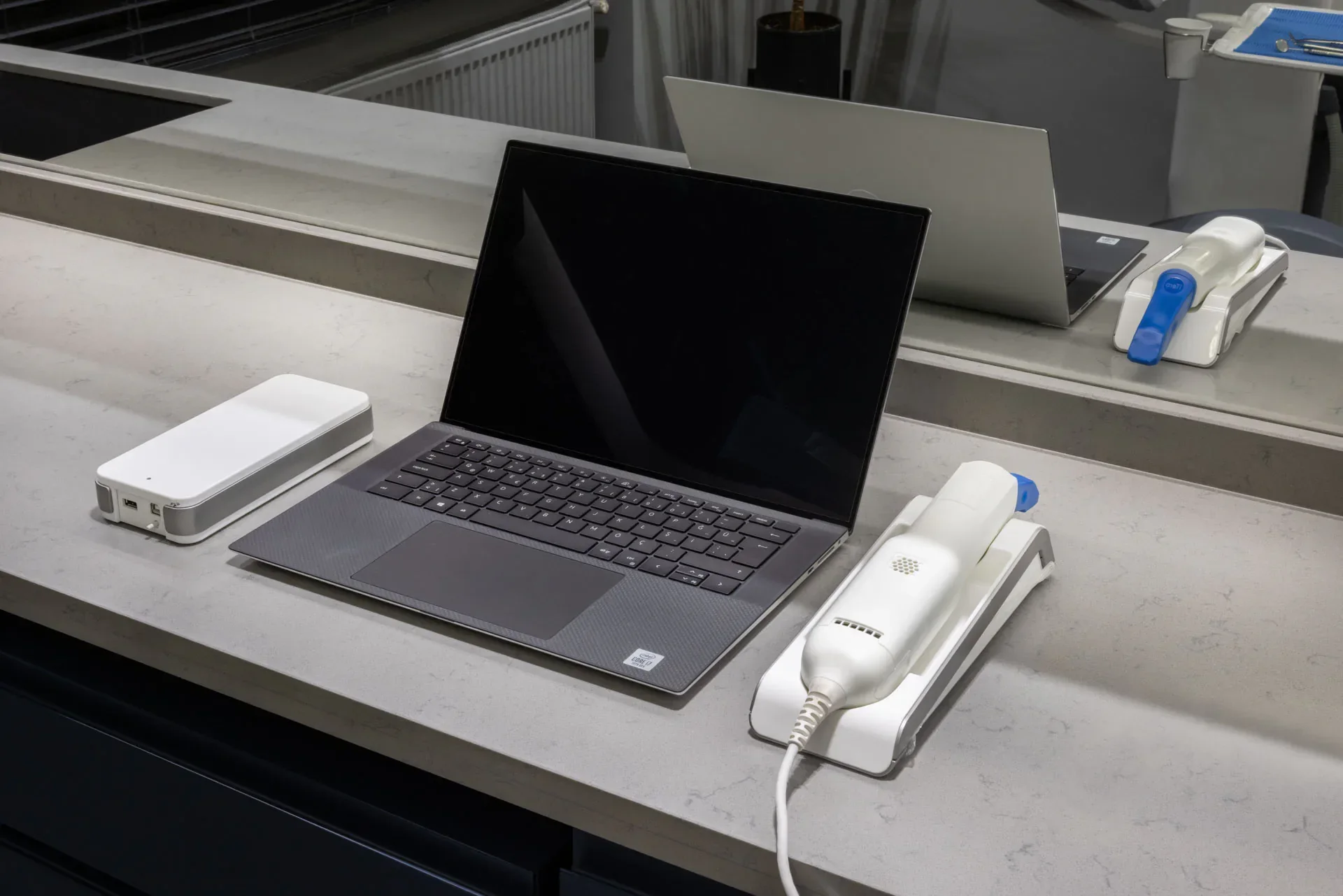
Intraoral Scanner vs Traditional Impressions: Accuracy and Comfort
An intraoral scanner records your teeth in 3D without impression putty. Here is how it compares with traditional impressions on comfort, time and accuracy, and where conventional methods are still preferred.
Treatment guides
Inlays and Onlays Explained: Filling vs Inlay/Onlay vs Crown
Choosing between a filling, an inlay or onlay and a crown depends mainly on how much healthy tooth remains. Here are the differences, how ceramic restorations are made and what studies show.
We are happy to answer your questions
You can send your questions on WhatsApp or reach the practice by phone.