
How Digital Smile Design Works: Process, Mock-Up and Realistic Expectations
Digital smile design is a way of planning treatment, not a treatment in itself. This guide walks through photos, scans and the in-mouth mock-up, and explains what a digital design can and cannot show.

Doğa Erginoğlu Dental Practice
Last updated:
When people hear "smile design", many picture a full set of porcelain veneers. Digital smile design (DSD) is something different. It is a planning method, not a treatment: before anything is done to your teeth, your face, lips, gums and tooth proportions are assessed together, and a proposed smile is designed and tested. This guide explains what happens at each step, which treatments a design may lead to, and what a digital simulation can and cannot tell you.
What smile design actually plans
A smile is judged as part of a face, not tooth by tooth. The length of a front tooth only makes sense in relation to your lip line, your gum level and the way you speak and smile.
Face, lips, gums and tooth proportions
During planning, the dentist usually looks at:
- How the midline of your upper front teeth relates to the midline of your face
- How much tooth and gum your upper lip shows when you smile
- The length-to-width proportions of the front teeth and how they relate to each other
- The symmetry and health of the gum line
- How much tooth shows when your lips are relaxed and when you talk
- Your current tooth shade and the shade you would like
None of this is a template: the same proportions can look very different on two faces, so the design is shaped around your features and goals.
A planning method, not a treatment
A 2020 review by Jafri and colleagues describes its main value as the ability to design the smile on photographs or scans and show it to the patient before anything irreversible is done. That makes communication easier and gives you a real say in the plan. Which treatment is then used to achieve the design is a separate decision, based on the condition of your teeth and gums. You can read more about the approach on the smile design page.
DSD step by step
Examination and goals
Every plan begins with a clinical examination of your teeth, gums, existing fillings and crowns, jaw joints and bite, with X-rays if they are needed. This is also when you talk about priorities. Is it the colour that bothers you, the shape, gaps, or how much gum shows when you smile?
Photos, video and intraoral scan
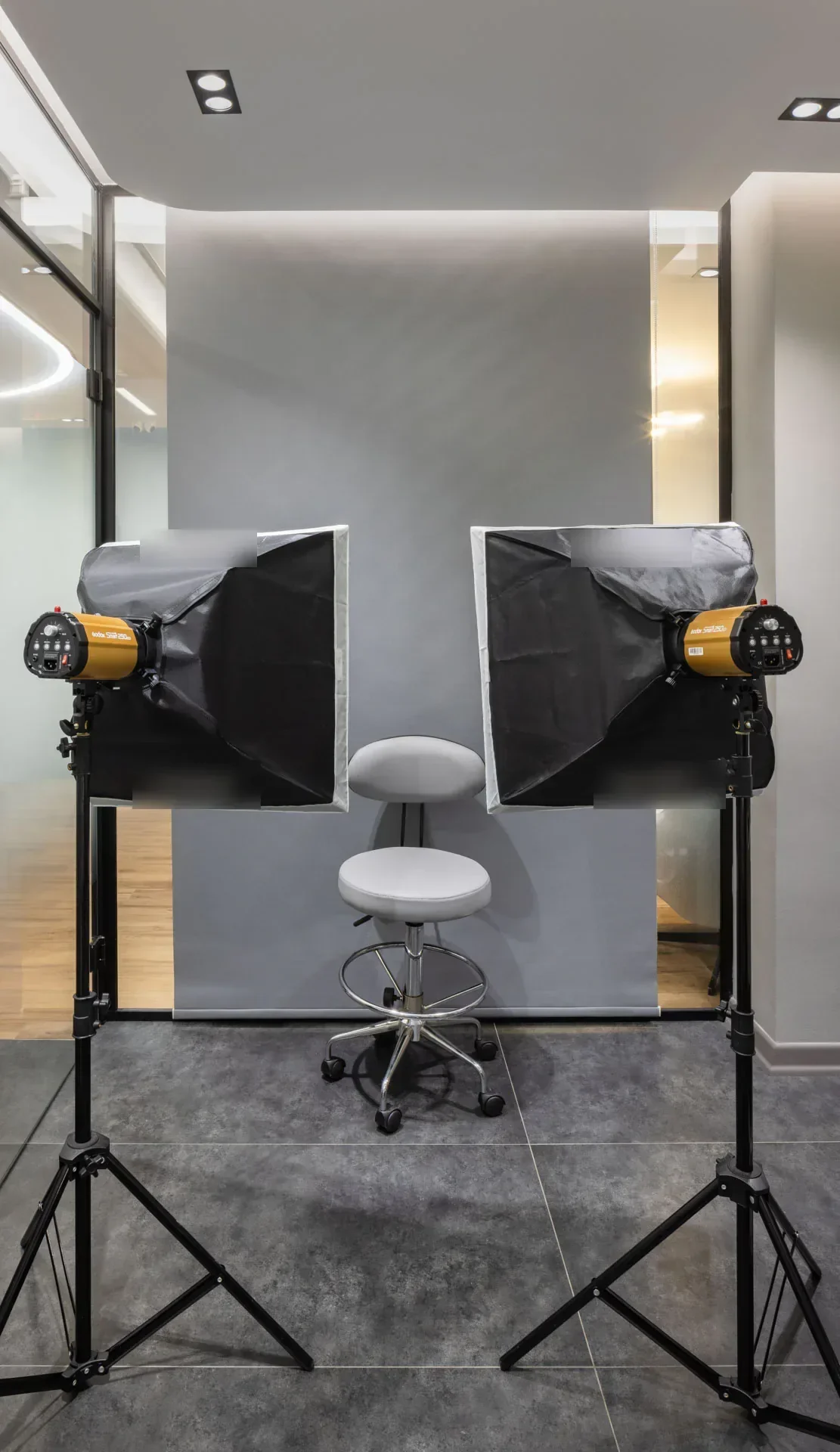
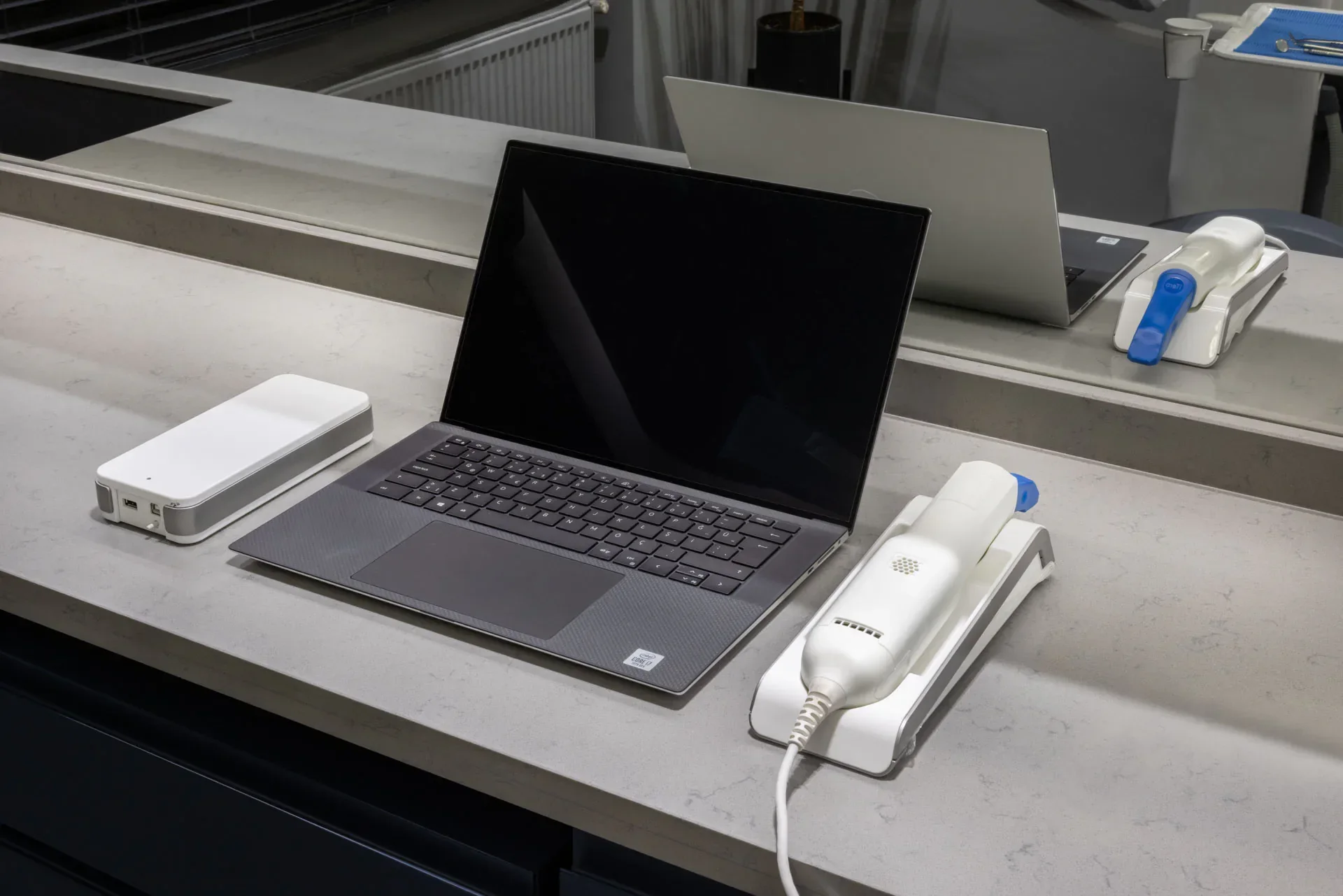
Next, a standard series of facial and intraoral photographs is taken. A short video adds information that still images miss, such as how your lips and teeth move when you talk and laugh. A three-dimensional record of your teeth is captured with an intraoral scanner instead of a tray of impression material. Scanning is explained in more detail in intraoral scanners vs traditional impressions.
Digital analysis and 3D design
The photographs and scan data are combined on screen. Reference lines from your face guide the analysis of the midline, tooth lengths and gum levels, and the proposed tooth shapes are then modelled in 3D. That model is also the basis for the mock-up in the next step. The digital dentistry page explains how scanning, design and fabrication connect.
Trying the design in the mouth (mock-up)
For many patients this is the most useful step. Using a guide made from the 3D design, a temporary tooth-coloured material is placed over your existing teeth for a short time. You can then see the proposed shape on your own face, in a mirror, while you speak and smile. In most cases a mock-up is done without drilling the teeth and is removed afterwards. This is the time to ask for changes to length, width or shape.
Treatment plan and sequencing
Once the mock-up is agreed, the treatments needed are chosen and put in order. If whitening is part of the plan, the shade of any restorations is selected after whitening is complete, because crowns, veneers and tooth-coloured fillings do not change colour with bleaching. Any gum reshaping usually comes before restorations. The number of visits depends on which treatments are involved.
Treatments a smile design may include
Smile design does not automatically mean veneers. A plan may combine several options, with the aim of reaching the goal with as little intervention as possible.
Teeth whitening
When colour is the only concern, whitening alone may be the whole plan, so it is worth assessing before veneers or bonding are considered. The cause of the discolouration and the existing shade both influence how teeth respond.
Composite bonding
Small chips, gaps or uneven edges can often be addressed with composite bonding. According to Cleveland Clinic's patient information, cosmetic bonding usually needs little or no enamel removal, so unlike porcelain veneers it is generally reversible. The trade-off is that composite stains more easily than porcelain.
Porcelain veneers
When shape, colour and the visible position of teeth all need to change, porcelain veneers may be considered. They are usually made from lithium disilicate glass-ceramic or feldspathic porcelain. The American Dental Association's MouthHealthy page points out that porcelain veneers require removing some enamel, so the treatment is not reversible, and that veneers may not suit people who clench or grind or who have a deep overbite. Cleveland Clinic gives a typical range of about 5 to 15 years for veneers.
Crowns
If a tooth has a large filling, a fracture or significant structural loss after root canal treatment, the design may be delivered with a crown rather than a veneer. The guide to veneers or crowns sets out how that choice is made.
Gum reshaping or an orthodontic referral
Sometimes adjusting the gum line, or moving teeth orthodontically first, reduces the amount of tooth reduction that restorations would otherwise need. If so, the plan is sequenced accordingly, and you may be referred to a colleague for that part.
Benefits and limits of a digital design
The clearest benefit is that decisions are made by seeing. A 2025 systematic review by Alwabel and colleagues found that, across the 7 studies it included, DSD-guided treatment was associated with higher satisfaction, treatment acceptance and perceived predictability than conventional planning. The same authors note that the evidence is limited by small samples and by differences between the studies.
So the image on screen is a shared target and a communication tool, not a copy of the final result. Several factors shape the finished look:
- How the chosen material transmits and reflects light
- How the gums settle as they heal
- The colour and position of the underlying teeth
- Your bite and the forces involved in chewing
A mock-up narrows the gap between design and reality, but it does not remove it.
What must be treated first
Cosmetic work lasts longer on a healthy foundation. As the ADA's veneer page notes, decay and gum disease need to be treated before cosmetic restorations. A typical sequence is:
- Treat decay and complete any root canal treatment
- Have a professional cleaning and bring gum inflammation under control
- Assess clenching or grinding, and plan a night guard if needed
- Then move on to whitening and cosmetic restorations
Planning for international patients
If you are travelling to Istanbul for treatment, you may want to start with photos sent from home. Photos are useful for an initial conversation, but they are not an examination: decay, gum health, your bite and existing restorations can only be assessed in person, with X-rays or scans where needed. Suitability for any treatment is decided after that assessment.
On the first visit, allow time for the examination, records and, ideally, a mock-up, so you can see the design before committing to anything irreversible. Multi-stage treatments are planned around their stages, and some need more than one trip. It also helps to agree at the start how follow-up will work with your dentist at home and how your scans will be shared.
Frequently asked questions
How many visits does smile design take?
It depends on the treatments used to deliver the design. The examination, records and mock-up are often spread over separate appointments, followed by the stages of the chosen treatment. A plan that involves only whitening is much shorter than one that includes veneers on several teeth.
Will the final result look exactly like the digital design?
The digital design is a target and a communication tool rather than an exact preview. The way the material handles light, how your gums heal and the colour of the underlying teeth all influence the final appearance. A mock-up in the mouth helps narrow the difference.
Do my teeth have to be reduced?
Not always. If the plan involves only whitening or composite bonding, there may be little or no tooth reduction. Porcelain veneers and crowns do require removing some tooth structure, and how much is decided after the examination and design.
Does a mock-up damage my teeth?
In most cases the mock-up is placed over your existing teeth without drilling and is removed afterwards. Its purpose is to let you see and assess the proposed shape before any irreversible step. You will be told what to expect during and after it at your appointment.
Does smile design always mean veneers?
No. Smile design is a planning method, and the plan may involve whitening, bonding, veneers, crowns, gum reshaping, orthodontic treatment or a combination of these. Which options suit you is decided after an examination.
Can a design be made from photos I send?
Photos can give a general first impression, but they cannot replace an examination. Decay, gum health, your bite and existing restorations can only be assessed in person with the appropriate imaging. Suitability for treatment is confirmed only after that assessment.
Sources
- 1.Digital Smile Design as a planning tool in aesthetic dentistry (review). Journal of Oral Biology and Craniofacial Research (2020) (opens in a new tab)
- 2.Digital Smile Design and patient-centred outcomes (systematic review). Cureus (2025) (opens in a new tab)
- 3.Veneers (patient information). American Dental Association (MouthHealthy) (opens in a new tab)
- 4.Cosmetic dentistry (patient information). Cleveland Clinic (opens in a new tab)
- 5.Dental bonding (patient information). Cleveland Clinic (opens in a new tab)
Related treatments
- incisors, caninesSmile DesignA planning process that looks at tooth colour, shape and proportions together with the face and lips, using photographs, an intraoral scan and a trial smile.
- incisors, canines, premolarsPorcelain VeneersThin ceramic shells bonded to the visible surface of front teeth, considered for colour, shape and small gaps.
- incisors, canines, premolars, molarsComposite Fillings and BondingTooth-coloured composite used to treat decay, repair chips and make small cosmetic changes, usually in a single visit.
- incisors, canines, premolarsTeeth WhiteningLightening tooth colour with peroxide gels under a dentist’s supervision, in the practice or at home with custom trays.
- incisors, canines, premolars, molarsCrowns and BridgesCrowns that cover the whole tooth and bridges that replace a missing tooth using the neighbouring teeth, made from materials such as zirconia or glass-ceramic.
Related articles
Treatment guides
Veneers or Crowns? How the Right Restoration Is Chosen
A veneer and a crown are different restorations, and zirconia is a material rather than a treatment. This guide untangles the terms and explains the clinical factors behind the choice.
Digital dentistry
Intraoral Scanner vs Traditional Impressions: Accuracy and Comfort
An intraoral scanner records your teeth in 3D without impression putty. Here is how it compares with traditional impressions on comfort, time and accuracy, and where conventional methods are still preferred.
We are happy to answer your questions
You can send your questions on WhatsApp or reach the practice by phone.